
Sex Offender Checks in Live Oak County
The Texas Public Sex Offender Registry is the main public search for Live Oak County. Texas DPS gathers registration data sent by local authorities and publishes the fields that Chapter 62 permits. It is free. A reader may search a name, scan a place, enter an address, choose Live Oak County, or use the map. The site can also support public notifications. No separate official county registry database was found, so the DPS record and the reporting authority named on a profile are the practical starting points.
A sound Live Oak County search uses more than a name. Compare the photograph, aliases, age or birth information, physical traits, address, reporting authority, and offense details. Similar names can mislead. The registry concerns Chapter 62 registration only. It does not replace the Live Oak County court file, the DPS conviction name search, or a fingerprint review of one's own history.
The DPS registry landing screen shows the official statewide access point.
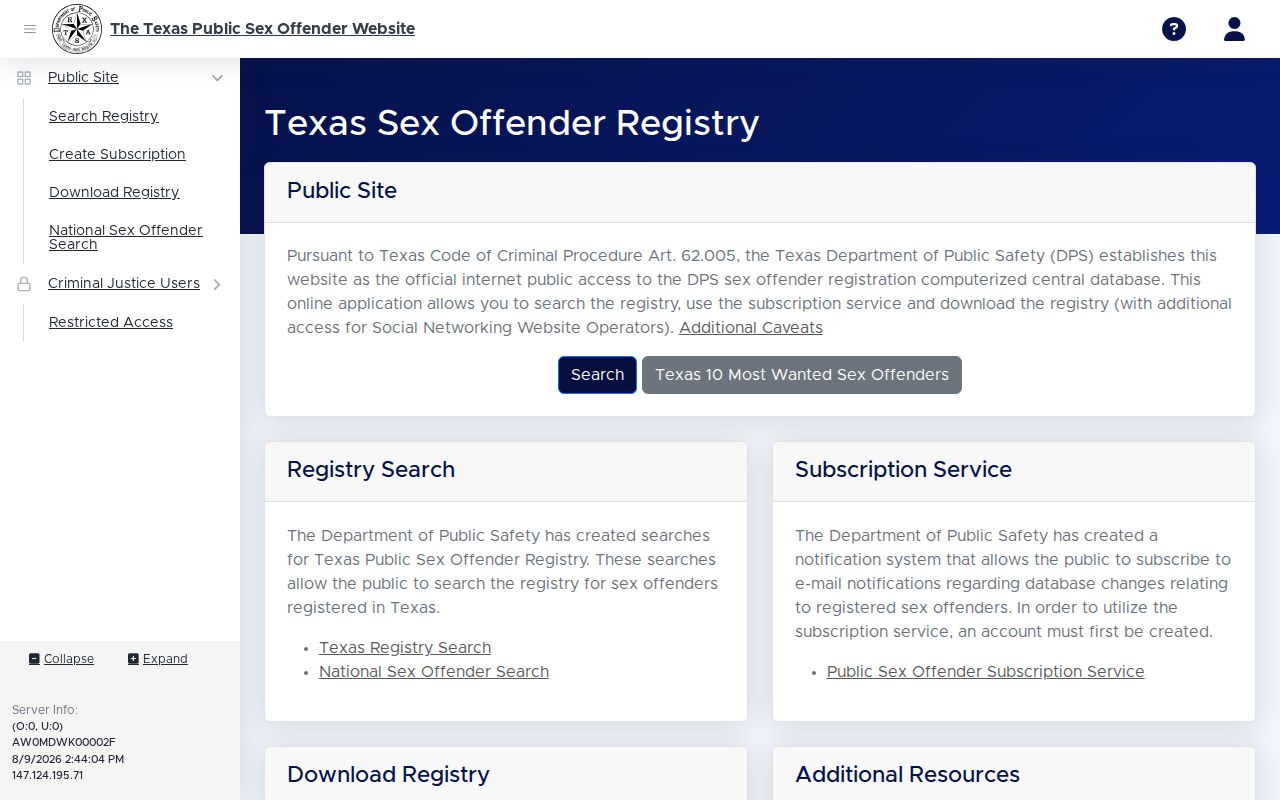
That state interface is the common search layer for George West, Three Rivers, and rural Live Oak County records.
How to Search the Texas Public Sex Offender Registry
Start with the narrowest facts you know, but keep an alternate route ready. Name search works well with a firm spelling. Address, city, county, ZIP, radius, and map controls can reveal records tied to a place. George West and Three Rivers provide useful city filters, while the Live Oak County option covers the county view. The public interface can change, so confirm the live radius choices instead of assuming a fixed distance.
- Open the official Texas DPS registry and read its conditions for lawful public use.
- Enter a last name with a first name, or choose an address-based route and select Live Oak County, George West, or Three Rivers.
- Review the results and compare several identifying fields. Do not rely on a same-name match by itself.
- Open the profile, note the reporting authority, registration status, offense information, and verification details, then use official contact routes for a real concern.
The DPS name and address search screen displays the controls used for a Live Oak County registry lookup.
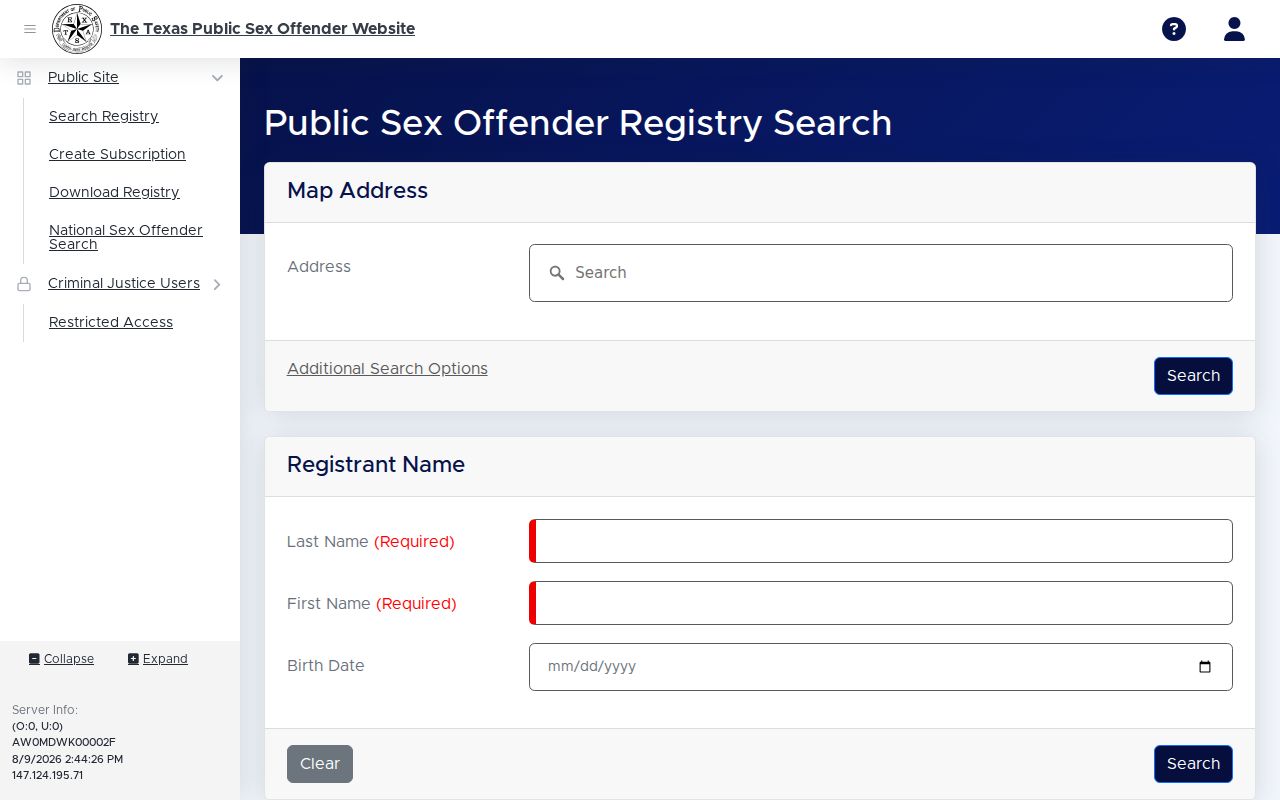
Its several routes let a reader move from a broad county view to a more focused place or identity check.
| Field Label | Type | Required | Live Oak County Use |
|---|---|---|---|
| Last Name | Text | Name route | May be paired with a first name |
| First Name | Text | Optional | Narrows a name result |
| Address | Text | Address route | Starts a street or location search |
| City | Text or dropdown | Address route | Use George West or Three Rivers |
| County | Dropdown | Optional | Select Live Oak |
| ZIP Code | Text | Optional | Useful for the 78022 and 78071 areas |
| Radius | Dropdown | Optional | Confirm current choices on the live form |
| Map Search | Map control | Optional | Pan, zoom, and inspect an area |
Live Oak County Registry Across States
The DPS registry is the authoritative Texas layer, but a family safety question may cross state lines. The U.S. Department of Justice operates the National Sex Offender Public Website, or NSOPW. It sends one query to participating public registries across the country. That makes it useful when a person may have moved, when the state is uncertain, or when an address near the county line is only one part of the question.
NSOPW does not turn a Live Oak County registry check into a general background search. Results still depend on the public data supplied by each jurisdiction. Return to the Texas profile for Texas-specific status, then contact the listed local authority if facts appear stale or inconsistent.
The official NSOPW interface shows the national search entry point.
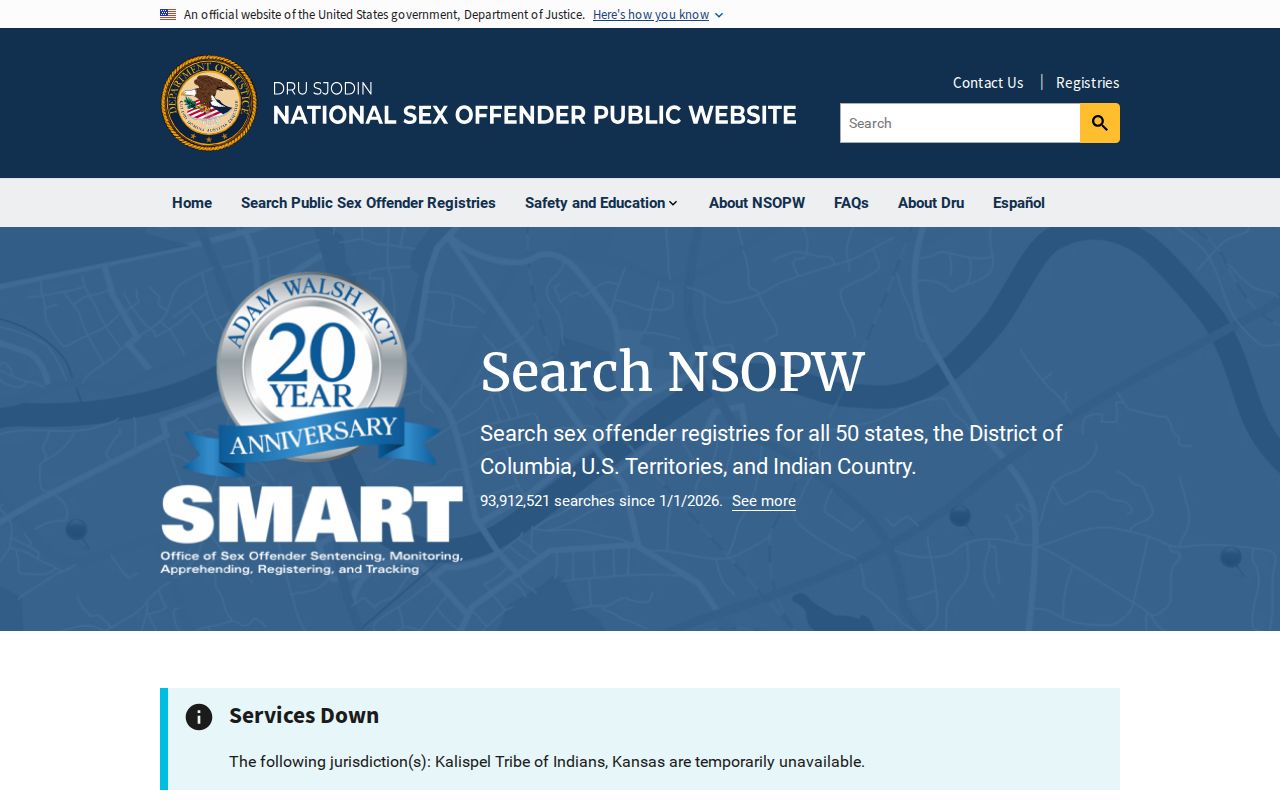
It adds cross-state reach while leaving Texas DPS and Live Oak County authorities responsible for their own records.
Inside a Registry Profile
A Texas public profile combines identity, location, registration, and offense data. The right reading order begins with identity, then the current status and reporting authority, followed by the offense and duty information. A photograph or address alone lacks context. Some facts may change, and profile language can reflect a conviction or adjudication from another jurisdiction. Use the profile's exact description rather than recasting it.
| Name and Aliases | Published identity names used to distinguish the listed person. |
|---|---|
| Photo and Description | Photograph, sex, race, age or birth data, height, weight, hair, eyes, and scars, marks, or tattoos where shown. |
| Address or Location | The public residence or location data allowed by Chapter 62. |
| Registry Identifiers | DPS or SID number and the local reporting authority. |
| Offense Record | Offense description or statute, conviction or adjudication date, victim age category, and sentence or discharge data where public. |
| Risk Information | Low, moderate, or high risk when a Texas assessment has been assigned. |
| Registration Status | Registration and verification information shown by DPS. |
| Other Public Fields | Vehicles and other Chapter 62 data when public collection and display are required. |
Note: A profile describes a registration record, not every arrest, charge, court event, or non-registerable conviction linked to the same name.
Protected Live Oak County Registry Data
Public access has firm limits. DPS does not publish a registrant's Social Security number, driver's license number, phone numbers, online identifiers, employer name or contact data, or extra information collected solely because DPS requires it. Information that identifies the victim is also protected. These exclusions protect people who are not the subject of the public notice and keep the registry within Chapter 62's disclosure rules.
Juvenile treatment needs special care. A juvenile court may order juvenile registration to remain nonpublic. The absence of a juvenile name from a Live Oak County public result therefore cannot support a claim that no registration or court order exists. Public searchers should use only the facts DPS lawfully displays and should never try to reconstruct withheld victim or private contact information.
Texas Registration Levels and Requirements
Texas does not use a simple public federal Tier I, II, and III chart for every Live Oak County record. Chapter 62 ties duration to the reportable offense and repeated-offense rules. An adult duty is generally ten years after discharge from supervision or lifetime. A separate risk assessment may label a registrant low, moderate, or high risk for notification purposes. Risk is not the same thing as registration duration.
The Texas DPS program overview explains the registry and public-notification structure.
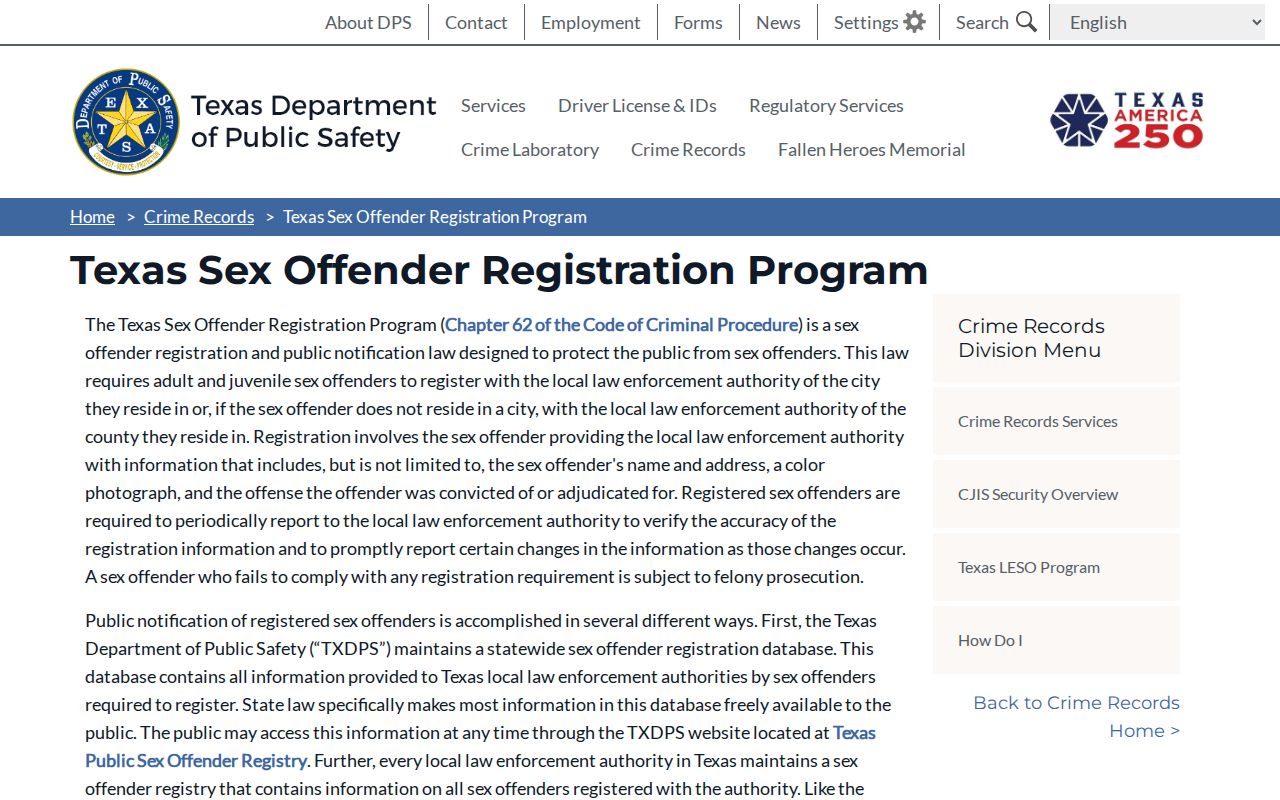
That program page supplies the state context behind a Live Oak County public profile.
| Framework | Duration or Meaning | Verification and Visibility |
|---|---|---|
| Ten-year duty | Generally ten years after discharge from supervision for covered adult offenses | Verification follows the statutory category; public display applies when Chapter 62 requires it |
| Lifetime duty | Lifetime registration for specified offenses and repeated-offense rules | Frequency depends on the statutory category; sexually violent offenders may report more often |
| Low risk | Risk-assessment classification, not a registration term | Used in notification decisions where assigned |
| Moderate risk | Risk-assessment classification, not a federal tier | Used in notification decisions where assigned |
| High risk | Higher assessed notification risk | May trigger stronger notice, including community postcards in qualifying releases |
Live Oak County Registry Alerts
The public registry may let users sign up for notifications tied to its service. These alerts help with ongoing family and community awareness after an initial Live Oak County search. They do not prove a violation, and they should be checked against the current DPS profile. A move, a reporting update, or a system correction can change what the public sees.
Texas also uses direct community notice in defined cases. High-risk registrants and civilly committed sexually violent predators released into a community can prompt DPS postcards in English and Spanish to the immediate area. The notice is not a blanket mailing for every Live Oak County registrant. It follows the category and public-notification law, so a lack of postcards does not mean the registry has no nearby entries.
Report a Live Oak County Registry Concern
Suspected noncompliance should go to the authority responsible for the location. Contact George West Police for an address inside George West, Three Rivers Police for an address inside Three Rivers, or the Live Oak County Sheriff at 361-449-2271 for the unincorporated county. Texas DPS Sex Offender Registration can also be reached at 512-424-2800. Provide the profile identifier, location, and the specific fact that appears wrong. Avoid assumptions and do not investigate in person.
The local office can compare the report with nonpublic verification records and decide what follow-up the law allows. DPS can address the statewide display. An entry that seems out of date may reflect reporting time, a move, a protected location, or a data correction. Safe reporting preserves the evidence and protects all people involved.
Community Notification and Lawful Use
Live Oak County registry data exists for public safety and community awareness. It can help a household understand a nearby listing, confirm the correct reporting authority, and plan a calm talk about safety. It does not grant power to threaten, harass, intimidate, or punish a listed person or anyone in that household. The safest response to a possible breach is a factual report to police, the sheriff, or DPS.
Chapter 62 also protects victim identity and other sensitive fields. Readers should not combine the public profile with rumor or post private facts that DPS withholds. For broader court outcomes, use the Live Oak County criminal court case file, since the registry is only one specialized record layer.
Use registry data lawfully: Misusing Texas Public Sex Offender Registry information to threaten, harass, intimidate, or commit another crime can bring criminal penalties under Chapter 62. Report concerns to the proper authority instead.